 |
 General Info |
 History |
 Sightseeings |
 Museums |
 Civilization |
 Excursions |
 Map |
 |
 |
 |
 |
 |
 |
 |
 |
 |
CIVILIZATION
|
People from Corfu keep the traditions alive. These
traditions were saved through the centuries despite the repeated
dominations by foreign conquerors. They managed to assimilate
the foreign elements in their own civilization and combine them
with the Greek element, resulting to a wonderful blend that astonishes
the visitor.
Today, Corfu lives under the intensive rhythm of tourism. The colorful visitors - who outnumber the inhabitants of the island - fill the hotels, the shops, the restaurants, the bars, the night-clubs, the casinos are looking for relaxation and entertainment day and night. The inhabitants of Corfu change from quite farmers to cosmopolitan business men. The touristic activity starts at Easter, which is celebrated with glory. Spectacular are the litanies dedicated to honor the memory of Saint Spiridon, who is the protector of the island. The litanies are accompanied by the Orchestra of the island. They are performed four times a year: the Sunday before Easter, at Easter, on August 11th, in memory of the first appearance of the Saint, who helped the inhabitants who were fighting against Turks, holding in one hand a burning candle and a cross in the other hand; and in the first Sunday of November in memory of the interference of the Saint to fight the epidemic of Cholera. This kind of worship to the Saint shows that people believe they are under the protection of Saint Spiridon. He is their Saint! In August after the doxology, they organize a glorious celebration. They prepare an enactment of the revolution and then follows the famous "varkarola", which is a boat parade where singers sing along with their guitars traditional songs of the island. There is a sailing stage, decorated with scenes taken from the tradition of Corfu and on top of the stage there are dancers who dance traditional dances while sailing, listening to the sweet music of the guitars. The sweet melodies and the wonderful show attracts many people along the port. In the end of the parade, incredible fireworks follow up, which light up and decorate the August's sky with many colors.
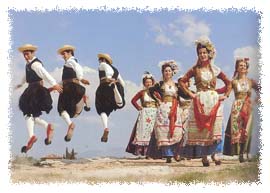
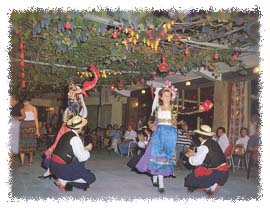
Moreover, they organize some more celebrations to honor other Saints: Friday after Easter in Palaiokastritsa, (Ascension) in Analipsi, in Argirades on May 8th, on August 15th (the death of Jesus Mother) in Kassiopi, on July 8th in Kavo of Lefkimmi (Saint Prokopios), on July 20th (Saint Helias) in Magouladea, on August 6th (Tranfiguration of Christ) in Pontikonisi, Saint Mathew, and the six day pilgrim on the Top of Pantokratora on August 23rd in Gastouni, in Peleka the Agious Deca and finaly on September 8th in the Village Afra. There, the traditional music of the people is still alive. Their main instruments are the guitar and the violin that accompany the verses, in Ionian dialect, and some times verses in Italian words. In Corfu music and theatre were easy to flourish. So, in the beginning of 17th century, the theatre of San Jacomo is founded and signals the beginning of an era, rich in artistic creation. Since the inhabitants of Corfu loved the theatre so much, they organized performances in their houses or in the central square, even in the time when Corfu was under the domination of the Russian-Turkish fleet. Today, different artists perform in the Public Theatre as well as in the fortresses. The Italian Lyric Theatre influenced the musical education and tradition at the time when the ground was still fertile for the development of literature with main representative the Poet Dionisios Solomos. Here, the first Philharmonic of Greece was founded, in 1840 by Niko Mantzaro, the composer who created the melody for the national anthem "Hymn to Freedom" by Dionisios Solomos. In all the events that includes dancing couples, the audience can admire the impressive dancing moves. The vivid steps, the graceful movements and the happy rhythm transfer to the audience, a feeling of optimism. The local woman's costume is characterized by vivid colors, embroidered apron, jewels, colorful kerchief which is decorated with big beautiful flowers. |

| |General Info| | |History| | |Sightseeings| | |Museums| | |Civilization| | |Excursions| | |Map| |
| |Hotels| | |Travel Agencies| | |Rentals| | |Restaurants| | |Cafe| | |Shops| | |Greek Tourism| |