The Athenians built sanctuaries to their two most
important deities, Poseidon and Athena, on the
rocky peninsula that projects into the sea at
the south-east tip of Attica.
The Temple of Poseidon,
god of the sea, was built on the summit of the
rock, which rises 60 meters above the sea. It
is surrounded by fortification walls. Two temples
to Athena Sounias were erected at a lower level.
The
peninsula of Sounio (old name: Sounion) was inhabited from the
prehistoric period. There seems to have been some form of cult
in Mycenaean times since Homer is the first to describe Sounio
as sacred. He relates that on the journey back from
Troy, Menelaus buried his steersman Phrontis here.
 |
The
excavations at the beginning of the 19th century
revealed that there was an organized sanctuary
here in thee Geometric period (tenth to seventh
century BC) and some of the earliest kouroi (boy
statues) of Greek art were erected in the open-air
sanctuary of Poseidon in the early 6th century
BC.
These kouroi are now in the National Archaeological
Museum in Athens. The
sanctuary of Sounio, with its strong fortress,
was directly connected with the metal-bearing
region of Lavreotiki.
In the mountain at Lavrion,
many ancient mining installations are preserved
and there are marble quarries in the area of Agrileza
which supplied the material for the Temple of
Poseidon.
|
If you look closely at the Doric columns rising above the coast you can find, on one of them, the signature of Lord Byron who was so captured by the beauty and the grace of the temple that he included it in his paean to Greek independence in his poem "Isles of Greece".
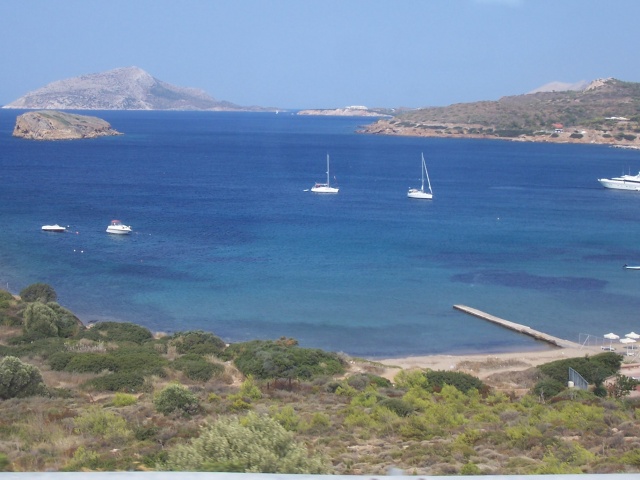
An hour from the temple you can find some nice beaches and seaside restaurants. Some beaches are owned by hotels which charge you to let you swim but there are a lot of free public beaches as well and some seaside stretches (along the bus route) which are always almost empty.


